
Smarter, Low-Carbon Heating with InstaGen Air Source Heat Pumps
A Smarter Way to Heat Homes
Our Air Source Heat Pump provides efficient, low-carbon heating for all home types, delivering reliable heating and hot water while helping household energy bills*.
Designed for simplicity, our heat pumps are quick to install, easy to maintain and seamlessly connects with the wider InstaGen product family; one integrated renewable solution, built for today and the future.
Whether you’re a homeowner looking for a cleaner, more efficient way to heat your home, or an installer searching for a reliable, well-supported energy system, our Air Source Heat Pump combines performance, design and innovation in one smart solution.
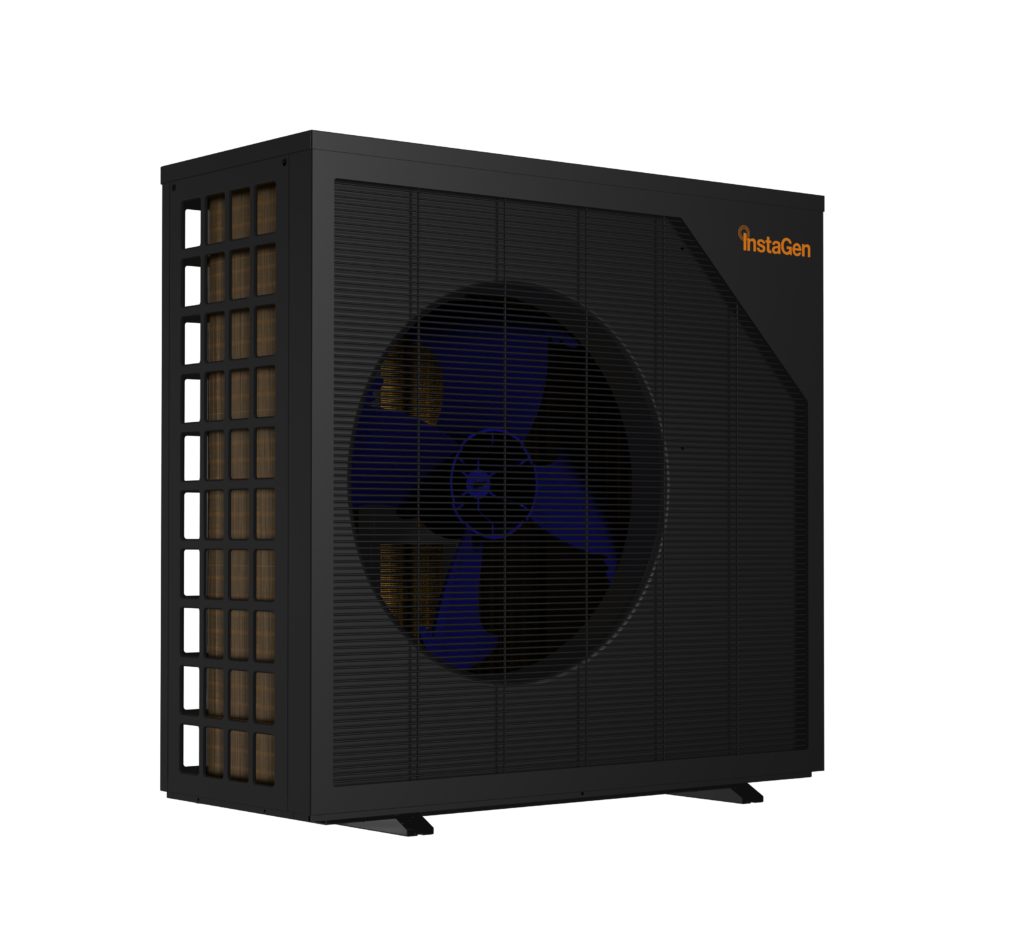
DC Inverter Heat Pump for cooling, heating and DHW (R290)
The InstaGen heat pump is a compact monobloc system utilising very low Global Warming Potential refrigerant – R290.
- Sleek, minimalist design
- Available in six kW capacities (3kW to 22kW)
- Powerful unit providing up to 75℃ flow temperature
- Reliable operation at ambient temperatures as low as -25℃
- Future proof compliance beyond 2027
- Can cascade up to 8 units, totalling 128kW max from a single controller
- Easy-to-use touch screen controller
The Air Source Heat Pump Installation Process
The Air Source Heat Pump Installation Process
Every installation is different, and the steps involved will depend on your property, your existing heating setup, and what the survey identifies. As a general guide, here is what the process looks like:
-
1. Site survey and heat loss calculationWe assess your home in detail to size the system correctly and identify any work needed to pipework, radiators, or insulation beforehand
-
2. System designOur team specifies the right unit and configuration for your home, with no one-size-fits-all approach
-
3. Boiler removalYour existing boiler will need to be decommissioned and removed before installation. This can be carried out by our team or by your current energy supplier, whichever suits you
-
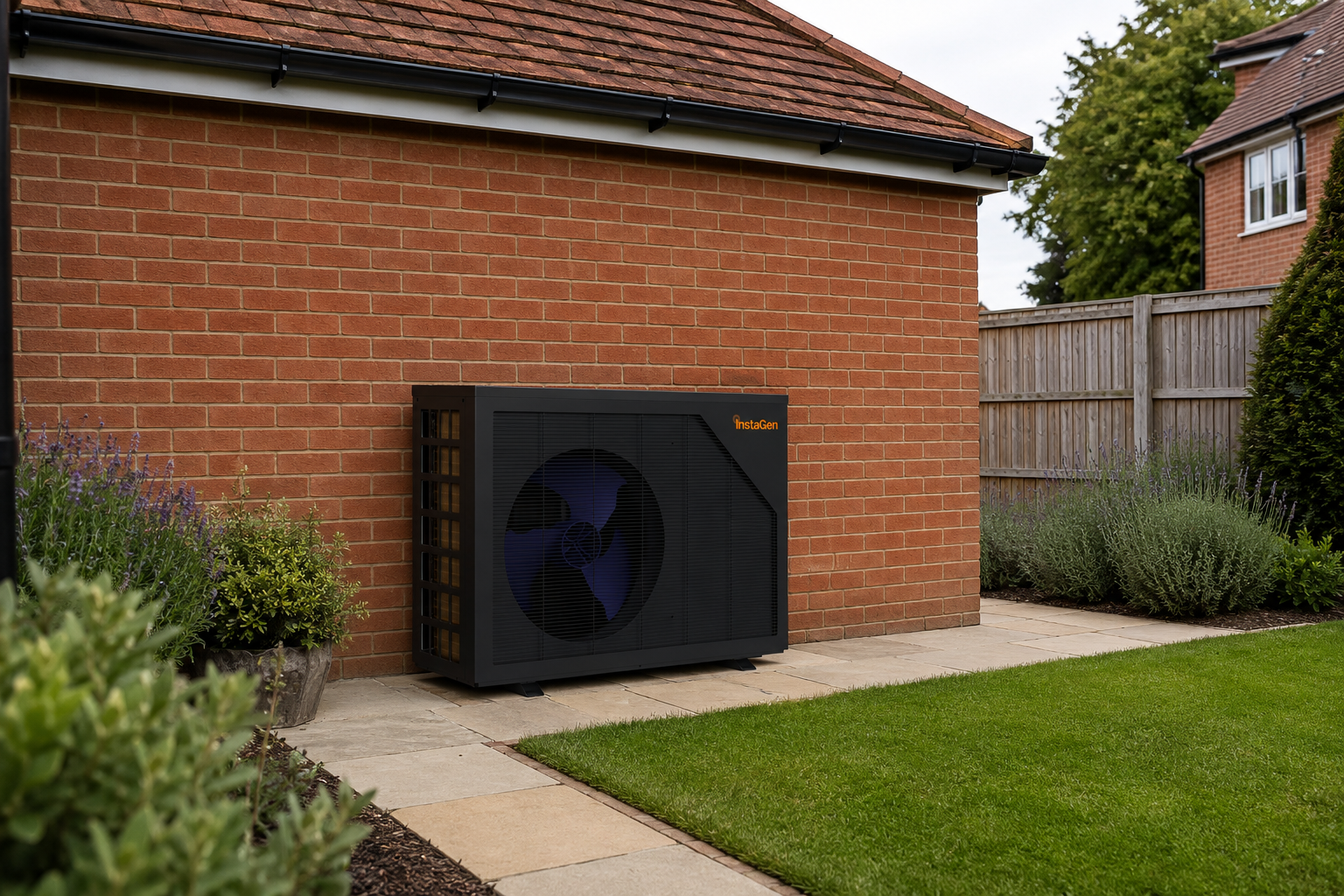
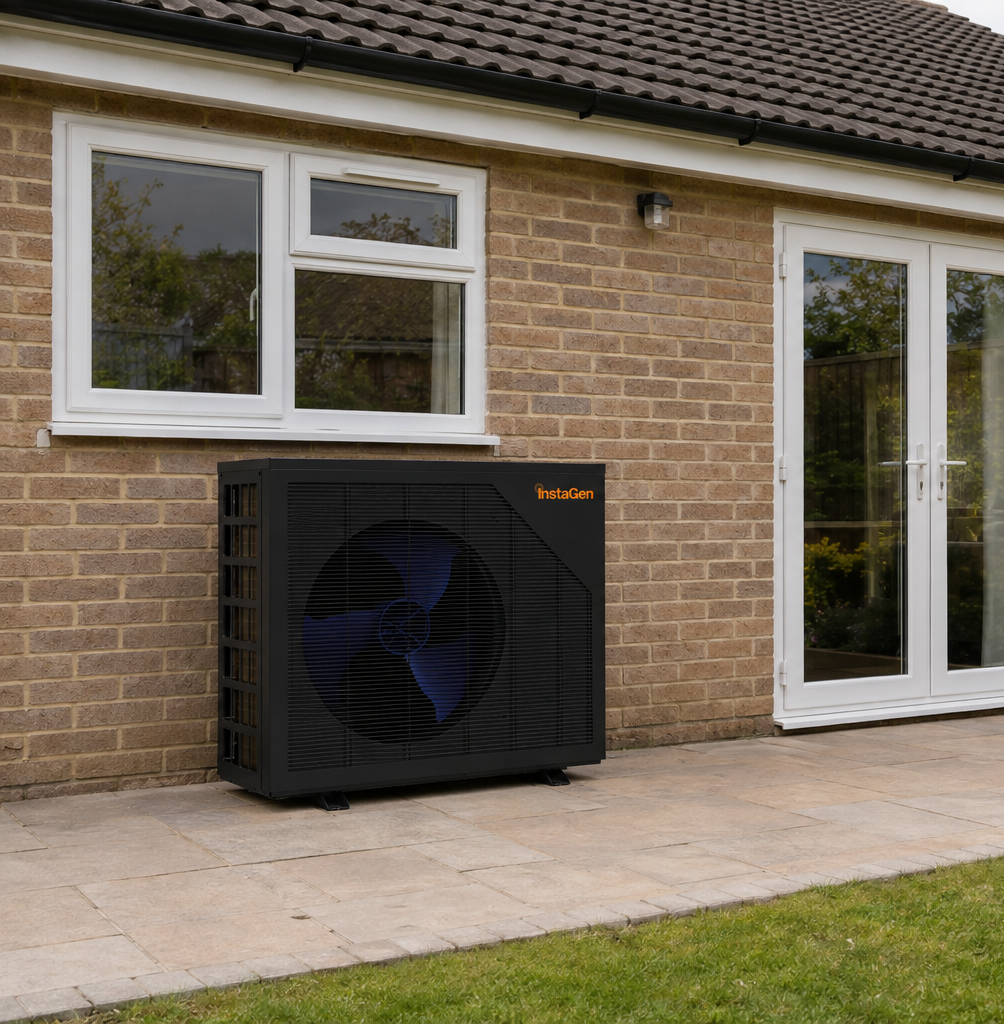
4. Outdoor unit installationOur installers position and fit the unit in the agreed location, keeping disruption to a minimum
-
5. Plumbing and wiringAll necessary pipework, electrical connections, and any radiator or cylinder upgrades are completed to the required standard
-
6. Testing and commissioningEvery system is thoroughly tested and commissioned to meet MCS standards before we sign off
-
7. HandoverWe walk you through your controls and monitoring so you feel confident managing your new system from day one
Quiet Mark Certified
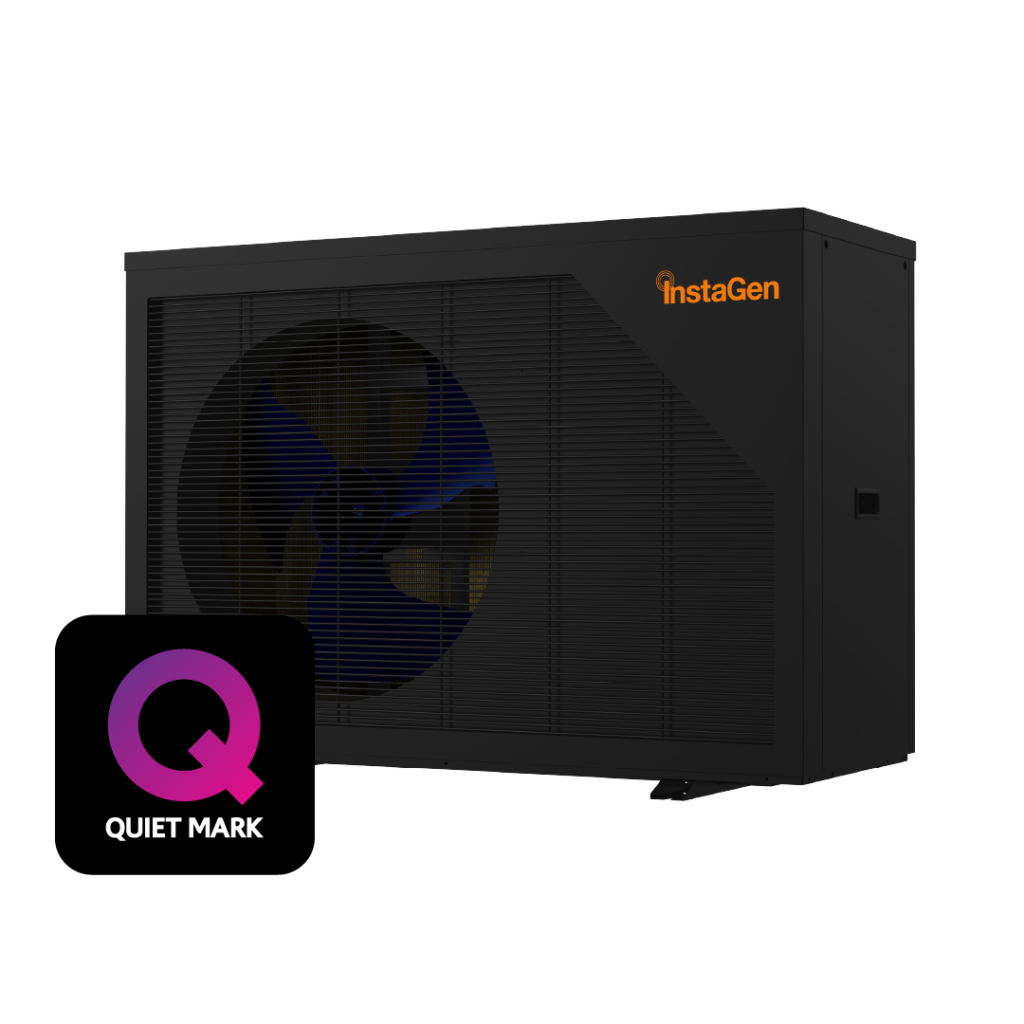
Our InstaGen Air Source Heat Pump is Quiet Mark Certified, an independent accreditation recognising products that are among the quietest in their category. Typically, only the top 10–20% of products tested achieve Quiet Mark certification.
Backed by the UK Noise Abatement Society, Quiet Mark certification gives you confidence that your heat pump delivers outstanding performance with minimal noise, helping to create a more comfortable home while reducing disturbance to neighbours.
Benefits of Quiet Mark Certification:
- Independently recognised as one of the quietest in its category
- Awarded to only the top 10–20% of products tested
- Quieter operation for greater home comfort
- High performance without compromising on efficiency
Why choosing experience matters
-
45+ years of experienceDecades of energy efficiency expertise, helping homeowners across the UK improve their homes with confidence.
-
Accredited & trustedFully MCS and RECC accredited, giving you complete peace of mind from survey to installation.
-
UK-based expertiseOur experienced team understands UK homes and recommends solutions tailored to your property.
-
End-to-end serviceFrom design and supply to installation and aftercare, we manage every step of your project.
-
Quality you can rely onWe use high-quality products and trusted installation practices to deliver long-lasting performance.
-
Dedicated supportOur friendly team is here to answer your questions and support you before, during and after installation.
-
Network of installersA nationwide network of experienced installers delivering quality workmanship across the UK.
-
Proven track recordTrusted by thousands of homeowners to deliver reliable, energy-efficient heating solutions.
Benefits of an Air Source Heat Pump
-
 Heating, Cooling & Hot Water in One
 -
 Low noise levels (35 - 47 dB, about the level of a quiet conversation)
 -
 3x - 5x more efficient than gas or oil boilers
 -
 Potential government grants of up to £9,000 under the Boiler Upgrade Scheme
Heat Pumps that Integrate with Solar & Battery Systems
Want to go one step further in energy independence?
Our Air Source Heat Pump can integrate seamlessly with your new or existing Solar & Battery system. Maximise self-consumption: use solar power directly or store excess in batteries.
Reduce your grid dependency, resulting in lower bills* and carbon footprint.
Air Source Heat Pump FAQ's
An air source heat pump is a renewable energy system that heats your home by extracting free warmth from the outside air, even on cold winter days, down to -25°C. It works just like a fridge in reverse, moving heat from the air outside into your radiators and hot water cylinder.
By replacing traditional gas or oil boilers, air source heat pumps help UK homes switch to low-carbon, sustainable heating. Because they don’t rely on burning fuel, they’re considered renewable and play a growing role in the UK’s move toward net zero
Unlike gas or oil boilers that create heat by burning fuel (combustion), air source heat pumps use electricity to transfer existing heat from outside air into your home (heat transfer). This process is highly efficient, with typical heat pumps providing 3-5 units of heat for every 1 unit of electricity used, far outperforming most modern boilers. Heat pumps operate at lower flow temperatures, delivering a gentle, steady warmth through radiators or underfloor heating for all-day comfort. The journey is simple: outside air passes through an evaporator, where R290 refrigerant absorbs its heat and is then compressed, releasing that heat into your home via a condenser, before cycling back through an expansion valve ready to start again.
Yes, air source heat pumps are among the most efficient ways to heat a UK home. Their Coefficient of Performance (COP) measures how much heat they generate from each unit of electricity, typically 3-5 times more than they consume. Seasonal performance (SCOP) remains impressive throughout the year. Good home insulation maximises this efficiency, ensuring you get the best value from your system. Compared to old electric heaters or boilers, heat pumps use less energy overall, lowering both bills and emissions.
Most UK homes can accommodate an air source heat pump, but suitability depends on more than just available space. As covered above, insulation levels and plumbing infrastructure both play a role in how efficiently the system will run, and we will assess both as part of your survey.
Beyond that, you will need:
- A small outdoor space for the unit, roughly the size of a washing machine, with reasonable airflow around it
- A dedicated indoor spot for a hot water cylinder
Once everything is in place, the system runs quietly and reliably at around 35 to 47 dB, no louder than a quiet conversation. Our survey process is designed to identify everything your home needs upfront, so there are no surprises once installation begins.
Yes. InstaGen air source heat pumps are designed for the UK climate and operate efficiently even at sub-zero temperatures (down to -25°C).
No. Most modern air source heat pump systems, including the InstaGen Heat Pump, are quieter than a typical gas boiler; operating at around 35-47 dB.
Our heat pumps have just been certified by Quiet Mark – recognition of exceptionally low-noise systems.
Sometimes. During your survey, we assess your existing radiators. In some cases, they’re suitable as is; in others, we may recommend a few upgrades for the most efficient operation.

Enquire today
*Estimated savings will vary depending on system size, installation, energy usage, and tariff.